jumpToMain
Corporate social integrity at Rheinmetall

Corporate Social Integrity at Rheinmetall

Round about 44,000 people at Rheinmetall have one thing in common: a great enthusiasm for technology. Alongside this commonality, however, there are also differences in a global technology group. As an employer, it is important to us to create a supportive and motivating working environment for all our employees.

Would you like to learn more? We look forward to telling you more!

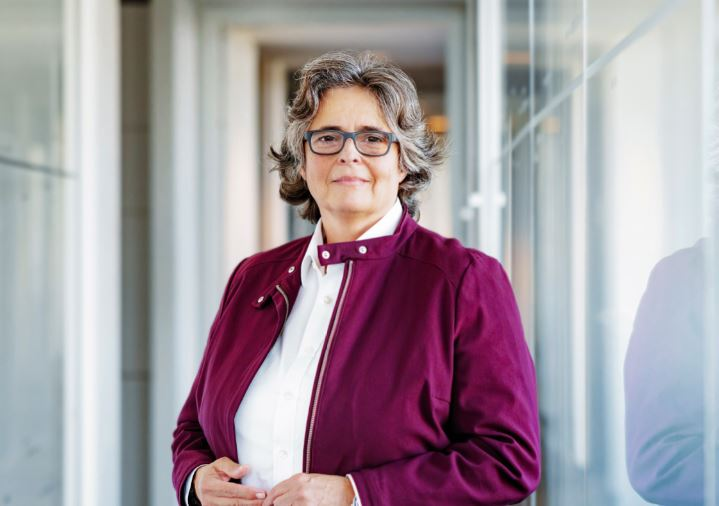
‘What inspires me at Rheinmetall in my day-to-day work is the open and respectful dialogue. We promote open and intercultural exchange. Because everyone can learn something from each other.’

MONICA WERTHEIM

Head of Global HR Operations

Monica Wertheim, Head of Global HR Operations

We firmly believe that equal opportunities are the foundation of fair and successful cooperation. That is why we create a working environment in which all employees are given the same opportunities. Only together can we achieve our goals and form a strong unit.

What unites us are the values on which we build: respect, trust, and openness. They are the foundation of our cooperation and the key to a culture in which everyone feels valued and supported.

We take responsibility for our employees so that everyone has the same opportunities for development. All perspectives, experiences, and personalities contribute significantly to our shared success. This is a major advantage of our international company.

On International Day of Persons with Disabilities, Rheinmetall once again sent a strong message about participation and accessibility. In this video about the corporate event, personal statements and impressions show what made this day so special. 

Live at the corporate headquarters in Düsseldorf

Together with Borussia Düsseldorf, Paralympic champion Sandra Mikolaschek and other guests impressively demonstrated the dynamism, precision, and passion involved in para table tennis. Our employees had the opportunity to try their hand at table tennis themselves – and gain valuable insights into the everyday lives of para-athletes through personal exchanges.

Digital at other locations

At the same time, online lectures on topics such as invisible disabilities, neurodiversity, and diversity of perspectives in everyday working life met with great interest. Our junior staff also took a clear stand for fairness, respect, and openness – as seen in their own video contribution.

With the support of the international #PositivelyPurple campaign – featuring purple banners on LinkedIn and illuminated corporate headquarters – the commitment was also visible to the outside world.

Seeing, hearing, and valuing people – and creating conditions in which everyone can contribute their strengths. That's what matters.

Matthias Pape, Group representative for severely disabled employees

‘You can trust Rheinmetall that you will never be disadvantaged or even dismissed because of your limitations. On the contrary. You can expect support, whether from the representative for severely disabled employees or from your superiors.’

Matthias Pape

Group representative for severely disabled employees

Matthias Pape is not someone who stands quietly on the sidelines. He has been involved in voluntary work since his youth – whether in clubs, on the local council or as mayor. But it was only with the birth of his second daughter, who was born with a disability, that participation became a matter close to his heart. “From that moment on, the issue was no longer abstract. I knew I wanted to make a difference – for my daughter, for others, for our community.”

He has been a member of the Works Council since 2010 and took on the role of representative for employees with disabilities at the Kassel site two years later. The next step followed in 2015: Pape became part of Rheinmetall's Group Representative Body for Employees with Disabilities (KSBV). Today, he is responsible for the interests of employees with disabilities on a full-time basis – and is personally committed to ensuring that participation is not just a concept, but a reality.

“What drives me? Seeing that our work really improves the lives of our colleagues. An adapted workplace, a successful application for equal treatment – for me, these are not formalities, but concrete improvements for real people,” says Pape. He is particularly proud of the significant progress that has been made in recent years: Among other things, a group-wide agreement has been concluded that goes beyond legal requirements. A guide for employees with disabilities has also been established – an important tool for orientation and support in everyday life.

Nevertheless, Pape still sees a lot of potential, especially when it comes to structural visibility and leadership culture: “There are many managers who are very sensitive and open to the issue. But there are also uncertainties, and in some cases even reservations. This shows us that education is an ongoing issue. Participation is not a project with an end date, but a continuous process.”

Pape sees a growing problem in the fact that many long-term employees with disabilities are retiring due to their age, while new hires do not include people with disabilities to the same extent. As a result, the proportion of severely disabled people in the company is declining. For Pape, this is no reason to give up, but rather a clear call to action: “We need to make greater efforts to attract young people with disabilities to our training programs. Getting them started is crucial.”

Internationally, there is currently no structural network for representatives of severely disabled employees at Rheinmetall. For Pape, this is an open field – untapped so far, but with potential: “We could learn a lot from each other, even across national borders.”

Creating a trusting environment remains a key concern for him. Many employees with disabilities are reluctant to openly discuss their limitations for fear of stigmatization. Pape wants to alleviate these fears: “Rheinmetall stands for participation. No one here is disadvantaged because of their limitations – on the contrary: we want to support, encourage, and promote.”

‘My hearing loss is not a weakness, but a strength. It has taught me to be open and self-confident and shows that being different is not a negative thing - it is a source of pride and strength.’

CARINA SEMBRITZKI

Internal Auditor

Carina Sembritzki, Internal Auditor
Carina Sembritzki, who has been working in Tatjana Hauner's Internal Audit team at Rheinmetall since 2021, is part of our team. Since the age of two, she has been severely handicapped by hearing loss bordering on deafness. She is open about her disability and draws conclusions that are important for everyone.

"Of course, there are situations in everyday life where I have to overcome special challenges. These include conversations with a lot of background noise, such as in the cafeteria or on the phone abroad. However, I never see this as something negative, but rather as "something" that can teach you a lot about yourself and other people.

I always remind myself that my hearing loss is not as present and obvious to others as it is to me. It helps to be extra open about it and also leads to nice and interesting conversations. That gives you self-confidence and self-awareness.

Rheinmetall has a very liberal approach to this issue. During the hiring process, employees were only asked what they needed to do their jobs properly. This includes a headset and an office with no background noise. "To be honest, it was never an issue otherwise," she says.

"Owning up to your disability also means owning up to yourself. You can only be helped if you are open about what you need.This is the prerequisite for finding solutions.If you don't hear well or can't follow a conversation, it's helpful to make people aware of that and communicate it openly. People are more aware of me and speak louder and slower, for example, which has a very positive effect on me because it makes my everyday life easier.And as mentioned above, overcoming difficult situations brings a lot of self-confidence and self-assurance".

She does not (yet) see a real "corporate culture for people with severe disabilities" at Rheinmetall. Although it is known that there are representatives for severely disabled employees within the prescribed framework, few details are known beyond that.

Carina Sembritzki has a lot of ideas."A common network, exchange of ideas, mutual support, maybe even a buddy for newcomers and so on... I have a lot of ideas!"

Her hearing loss does not define her limits, but her possibilities.She has learned to be proud of her individuality and to go her own way with confidence.

And with this interview, she will hopefully inspire many people, both inside and outside Rheinmetall, to follow their own path openly and confidently.

Ruben, Annual intern in HR

“Seeing the person behind the disability – that's what real support means to me.”

RUBEN

Annual intern in HR

From a school internship to a year-long internship – and soon to an apprenticeship?

What has changed most for him personally since his mandatory internship at Rheinmetall – both professionally and personally?

Ruben answers this question without hesitation. Thanks to the cooperation agreement with Rheinmetall, he was able to start a year-long internship – and to discover how much he feels at home in IT. His enthusiasm has made an impression:

“We are currently in negotiations about whether I can start an apprenticeship as an IT specialist for system integration next year.”

For Ruben, this would be a milestone:

“Getting this opportunity was one of the greatest moments in my life.”

What companies can do

Ruben has clear ideas about what really supports people with disabilities.

When asked, “What three things should companies definitely consider if they want to support people with disabilities on their way into working life?”, he mentions:

  • The willingness to take unfamiliar paths
  • Recognizing the personality behind the disability
  • Accepting people as full members of the team

Fairness, participation – and real opportunities

Moments of genuine fairness? Ruben experienced them. Especially when it became clear that his work during his year-long internship could open the door to an apprenticeship.

“For me, that was real participation.”

Skills that make things easier

“Openness, politeness, and team spirit” – these are qualities that Ruben consciously brings to the table.

Orientation and sources of energy

The day at the Security Operations Center was particularly decisive for him: “The internship day at the SOC made my desire to go into IT even stronger.”

Advice for young people with disabilities

If Ruben can pass on one tip, it's this: “Never give up. Believe in yourself, fight – but never alone. Get support from family and friends and don't let anyone tell you that you can't do something.”

‘I like my work here at Rheinmetall. The way we interact with each other, the respect we receive from our superiors, and the communication — all of this develops over time.’

RENAN FERREIRA

Production Operator

Renan de Jesus Ferreira, Production employee
Renan is one of our deaf colleagues in Brazil. He is very grateful for the opportunity to show how hearing impairments are managed in a production environment. Renan has been with us since 2017 and works as a production employee at a Pierburg plant.

He lost his hearing before he was born because his mother had a rubella infection. He learned LIBRAS, the Brazilian sign language, and says: “I learned that communication between deaf and hearing people takes place via LIBRAS. The Portuguese language is a little different for us.”

During his time at Rheinmetall, Renan has been acquiring new knowledge which helps him to grow. Personally and as a production worker. He learned a lot about quality in customer delivery, something he hadn't known before. And he still wants to know more. His experience gives him additional confidence for the future. For him, and for all people with hearing impairments
We are proud to tell Renan's story in his own words. Watch the full video here to see and hear his experiences firsthand.

Bruno Maniezzo Da Silva, Production employee

‘Life is a constant change. But one thing never changes: the value of respect.’

BRUNO SILVA

Production Operator

Bruno is one of our colleagues in Brazil. He works for Rheinmetall for thirteen years – and his journey is one of growth, mutual learning and connection. And Bruno is deaf.

In the beginning, communication posed challenges. But over time, thanks to supportive colleagues and leaders, real progress has been made. At work, he says, everyone has a role – and when communication works, quality follows.

He appreciates the connection with deaf colleagues across borders – especially between Brazil and Germany. Regardless of the language, communication remains key, which works perfectly well without spoken words.

We’re proud to share part of Bruno’s story in his own words. Watch the full video here to hear his experience firsthand.

180476

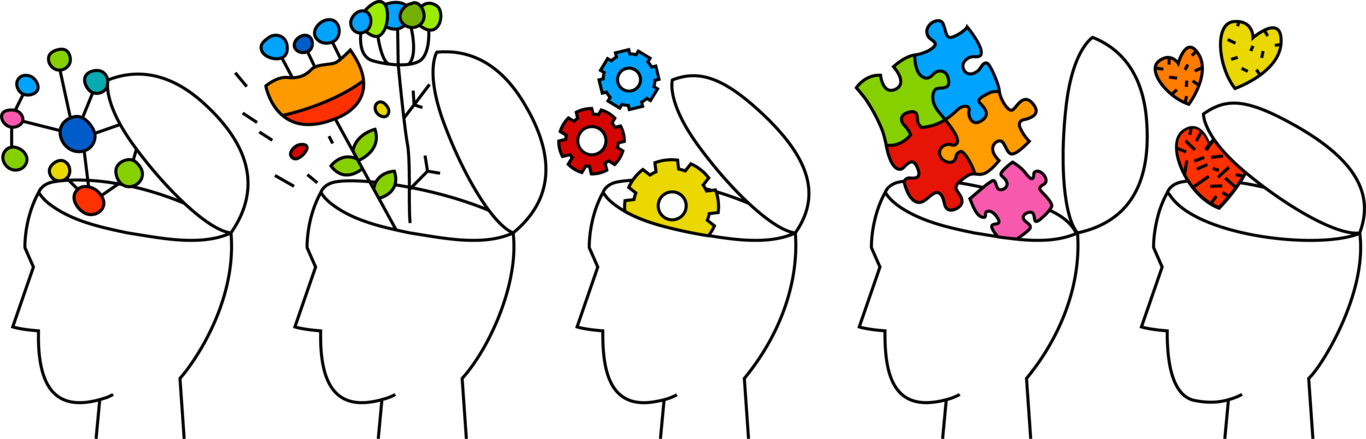
The human brain can develop in many different ways, both in terms of its structure and how it functions. These differences shape our individual ways of thinking and perceiving the world. While some neurological patterns are more common and are referred to as “neurotypical,” there are also forms that deviate from this. People with these characteristics are referred to as “neurodivergent.” Neurodivergence is not a disease, but an expression of natural variety.

Learn more ...

What is neurodivergence?

  • Autism spectrum disorders (ASD)
  • Learning and partial performance disorders
    • Dyslexia (reading and spelling disorder),
    • dyscalculia (dyscalculia)
  • AD(H)S (attention deficit/hyperactivity disorder)
  • Dyspraxia (coordination disorder)
  • Tourette syndrome
  • and many other variations


Why does this affect us all?

Neurodivergent people are part of our society, families and work teams. They bring special perspectives, strengths and often creative solutions. At the same time, they often encounter misunderstandings, sensory overload or inappropriate expectations in everyday life.

A neurodivergence-friendly working environment is not an "extra", but an investment in team health, productivity and fairness. Even small adjustments to the environment – such as a quiet workplace or flexible break arrangements – can make a big difference. Understanding differences in social skills is just as crucial. People with autism, for example, often fail to pick up on non-verbal signals such as facial expressions or posture. However, with exercises and an analytical approach, they can learn to interpret these cues. Conversely, neurotypical individuals can learn to better understand the behavior of people with autism or ADHD, for example.


Equal opportunies start in the mind and make us strong as a community!

Neurodivergence is not a weakness, but part of human variety – including in professional life. Those who recognize, value and specifically support differences not only promote inclusion, but also participation, motivation and mental health.


Sources: Neurodiversity: Is being different normal? | BARMER

176252

Continuous exchange creates understanding and connection. That's why various networks within the Rheinmetall Group are available to anyone who wants to talk. Further networks are welcome.

1674

2017

Rheinmetall signs the Charter of Diversity.
40429

2018

Foundation of the international network women@rheinmetall.
169246

2024

Rheinmetall becomes a partner company of VDI WomentorING

188447

2025

Recognised as a top company for women.

Rheinmetall Platz 1

40476 Dusseldorf

Germany

Contact us

© 2026 Rheinmetall AG