01/09/2026 | Story
Airspace security: how Rheinmetall tackles the hybrid drone threat
The skies over Germany are the scene of a hybrid threat. It has been clear for some time – not just since the incident at Leipzig/Halle Airport, in which a drone carrying the military explosive Semtex was found near a cargo aircraft – that safeguarding airspace is of paramount importance to security authorities and critical infrastructure operators. A piecemeal defence is no longer sufficient; what is needed are networked, cross-system approaches. As a leading international systems provider for security and defence, Rheinmetall is well placed to meet these challenges both technologically and operationally. We are proven experts in air defence and drone protection. Our drone defence systems have proven their worth in Ukraine, the Arab world, and in protecting critical infrastructure in Germany.
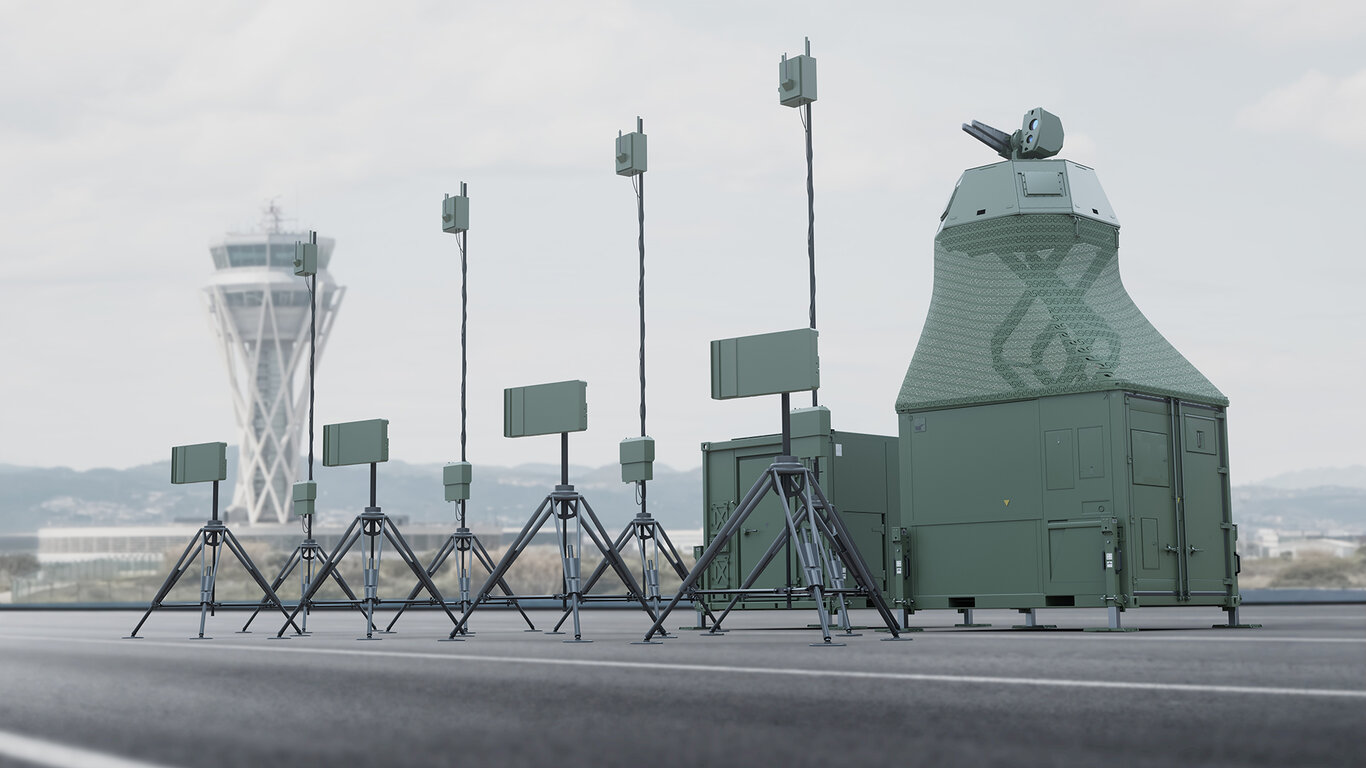
Protecting sensitive facilities such as airports from drones requires a combination of high-performance sensor technology and situation-specific countermeasures. Rheinmetall's approach combines various physical detection principles. These include 3D radar solutions, radio direction finders and acoustic systems that can be scaled up. These systems can detect people, vehicles and drones passively and independently of line of sight. AI is used to identify relevant events and make them available almost in real time, providing a robust situational picture. These sensors can be configured according to requirements and the situation.
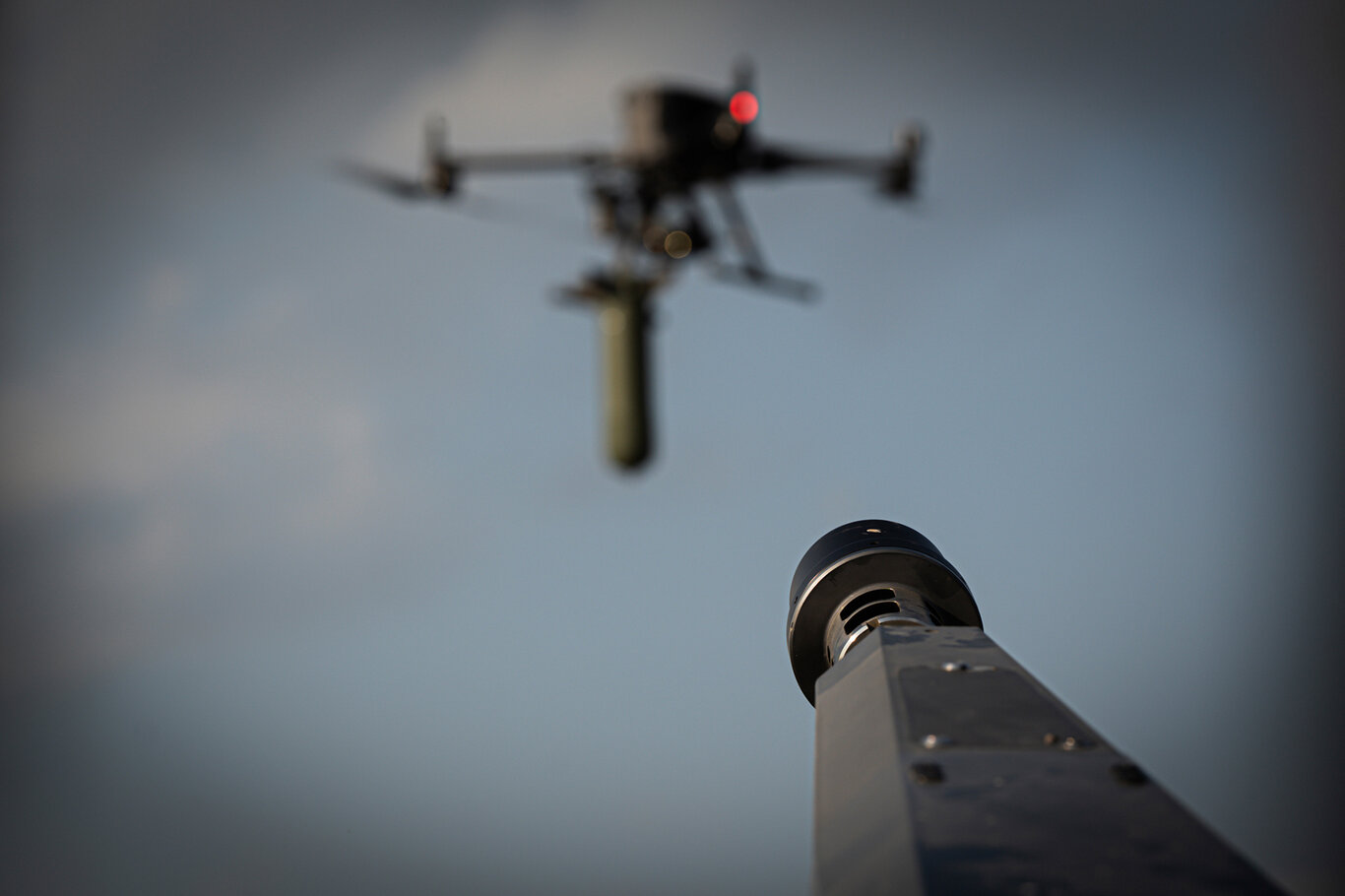
One such component is the Skyspotter electro-optical detection and tracking system, which continuously scans the airspace to provide 360-degree coverage. By combining thermal imaging and daylight cameras with AI-based image processing, the system can verify and track even the smallest low-flying or radio-silent drones. The Skyspotter system has proven its effectiveness in real-world conditions at airports. This combination of sensors guarantees seamless airspace surveillance without disrupting flight operations.
At the heart of the system are mission-specific digital command and control systems. These consolidate sensor data in real time, providing the operations centre with an up-to-date picture of the air situation. This enables threats to be identified precisely and indicates when the danger has passed and there are no longer any drones in the air. This helps civil airports save time and resume operations. To further expand this protection in the civil sector, we are collaborating with Telekom to take the next step towards a nationwide drone defence system. T-Systems' infrastructure, particularly its mobile phone masts, can be used to install radio direction-finding capabilities nationwide. This enables radio-controlled (radio frequency, RF) drones to be detected.
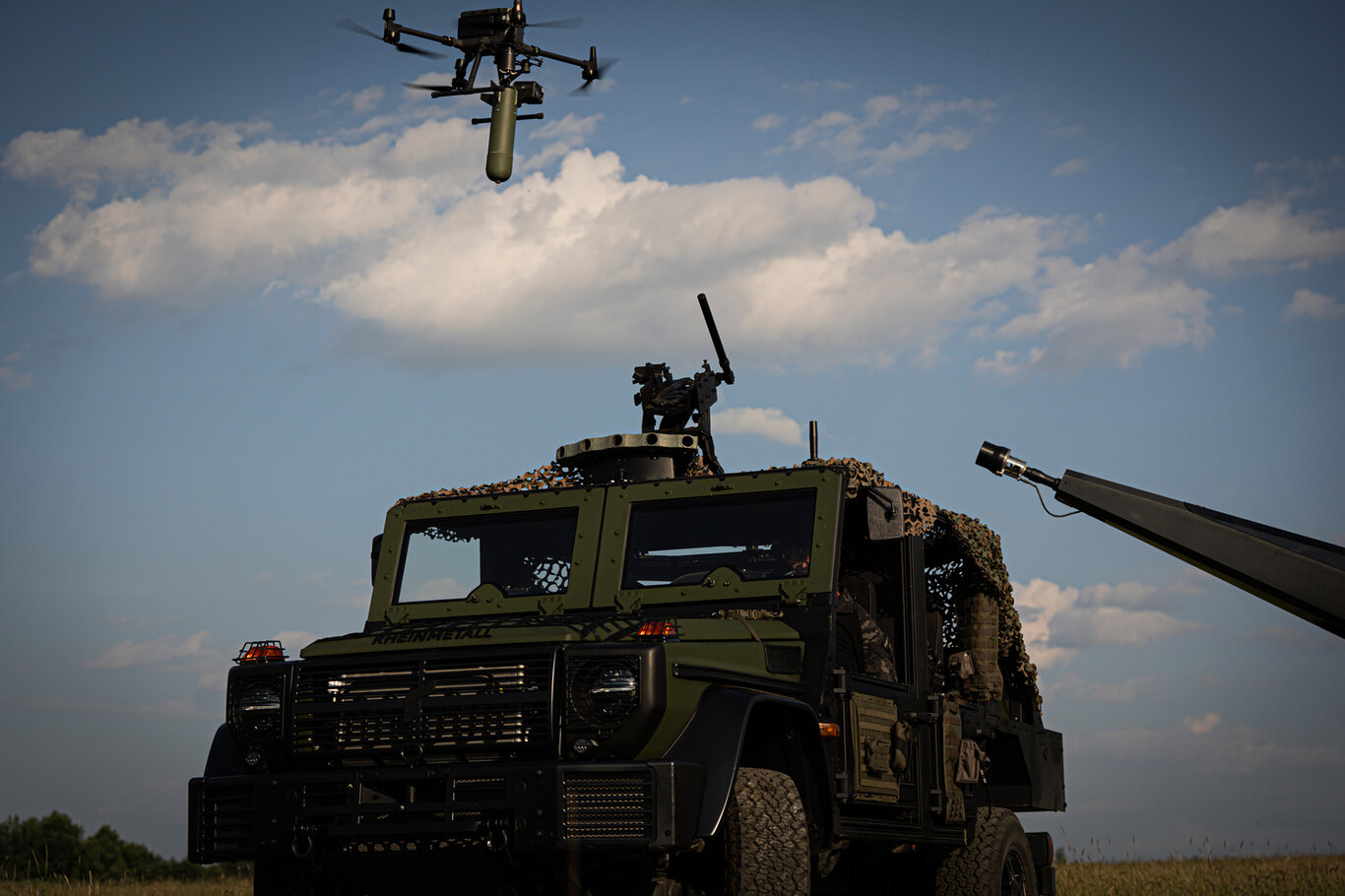
As soon as a threat is identified, tailored countermeasures must be taken. We primarily rely on targeted jammers (electronic defence methods that block a drone’s radio or GPS signals without destroying it physically) in the ‘soft-kill’ domain, or autonomous ramming drones known as ‘interceptors’, which intercept hostile systems in flight. Further effectors can be deployed within a modular system, including high-energy laser systems. Another example is the Skynex system, which uses programmable ‘Ahead’ munitions to protect critical infrastructure in Ukraine.
It is important to distinguish between the two: Skyspotter is primarily designed to protect critical infrastructure in peacetime. Should the conflict escalate or the threat level rise significantly, however, the system can be upgraded to include 'hard-kill' capabilities, i.e. kinetic defence methods for the physical destruction or shooting down of the target. While integration with the Skyranger mobile air defence system is technically possible, it is not currently planned for the protection of civilian airports.
The deployment of this technology requires a clear legal framework. The Leipzig incident has reignited the debate over responsibilities. Responsibilities are clearly defined: the Bundeswehr is responsible for military airspace protection within the framework of national and alliance defence. Within Germany, counter-terrorism is primarily the responsibility of the federal states and federal authorities. The Federal Police play a central role in border and airport protection. While the Federal Police are authorised to take measures such as jamming radio signals or intercepting communications to prevent threats, the powers of intervention of the Bundeswehr within Germany are strictly regulated by the Basic Law and are limited to providing administrative assistance. In view of current threats, further harmonisation is required to close security gaps.
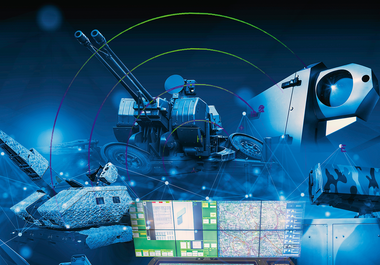
As a strategic partner, Rheinmetall stands ready to provide technological support for this process. Our modular 'Drone Defence Toolbox' offers scalable solutions tailored to respective legal powers, ranging from passive detection and soft-kill measures for public authorities to military air defence organised into different layers based on range. As a cross-system technology provider, Rheinmetall can help policymakers and public authorities bridge the technological gap and close the legal one.


Senior Media Relations Manager / Spokesperson Digital Systems
Phone: +49 151 70 50 53 66
Media Relations Manager / Spokesperson Air Defence
Phone: +49 211 473-4054